Heart Butterfly Embroidery Design
A Romantic Motif That Stitches With Intention
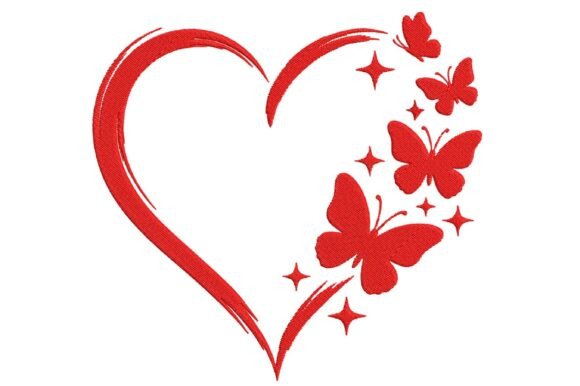
As someone who’s stitched hundreds of machine embroidery designs for clients—from boutique baby blankets to custom wedding totes—I opened the Heart Butterfly Embroidery Design expecting charm, but what stood out immediately was its quiet confidence. It doesn’t shout. It leans in. The flowing heart shape isn’t overly symmetrical or rigid; it curves like a breath held mid-sigh. The butterflies aren’t scattered—they’re nested within the heart’s contour, wings angled just enough to suggest motion without chaos. And those “sparkling accents”? They’re subtle—tiny running stitches and delicate satin highlights—not glittery distractions. This is a design built for emotional resonance, not visual noise.
Where It Lives Best: Real Projects, Real Reactions
Last week, I prepped a limited-run batch of linen tea towels for a local gift shop’s Valentine S Day collection. I chose the Heart Butterfly Embroidery Design for the lower right corner—small enough to feel intentional, large enough to read at arm’s length. On the finished towel, it landed exactly as hoped: elegant but approachable, romantic without cliché. Customers paused. One said, “It feels like something my grandmother would’ve stitched—but with today’s ease.” That’s the sweet spot: handmade product warmth meets modern clarity.
It also translated beautifully onto a lightweight cotton sweatshirt (using tear-away + light cutaway stabilizer). No puckering. No lost detail in the butterfly wing veins. The satin stitch on the heart outline held crisp definition, and the fill stitch inside remained breathable—not stiff or plasticky. For Etsy sellers or small shop owners, that means fewer returns, more repeat buyers, and photos that convert.
Where It Asks for Thoughtful Handling
This isn’t a “throw-it-on-anything” embroidery file. Its grace comes with gentle conditions:
- Small hoop sizes: Avoid hoops under 4x4 inches—the butterflies’ wing details and fine sparkle accents risk blurring or stitching inaccurately.
- Textured or stretchy fabric: On terry cloth towels or jersey knits, use medium-weight cutaway stabilizer and reduce top tension slightly. The design’s open areas can sink or distort otherwise.
- Dark fabric: Test thread colors thoroughly. Light pastels (ivory, blush, pale gold) pop, but avoid white-on-black unless your machine handles fine satin stitch density consistently.
- Curved surfaces: Skip caps or curved pillow edges. The heart’s flow relies on flat, stable real estate—best suited for tote bag fronts, apron pockets, or pillow covers with squared corners.
- Frequent-wash items: Not ideal for baby onesies meant for daily laundering. The delicate wing outlines may soften over time. Better for keepsake items—nursery wall art, framed patches, or holiday gifts meant to be treasured, not tossed.
What It Adds—Beyond Aesthetics
The Heart Butterfly Embroidery Design quietly lifts perceived value. On a plain cotton tote, it transforms utility into sentiment. On a kitchen towel, it shifts function toward ritual—a reminder of care in everyday moments. For craft business owners, that translates directly to pricing power: customers pay more for pieces that feel *considered*, not decorated.
It also strengthens brand consistency. If your shop leans into soft romance—think botanical baby lines, slow-living home goods, or mindful gifting—the design reinforces tone without needing words. No tagline required. Just one well-placed heart butterfly says, “This is made with attention.”
And yes—it performs in digital spaces too. In printable mockups for Etsy listings, it renders cleanly at 300 dpi. No jagged edges. No muddy gradients. That matters when buyers are scrolling fast and deciding in seconds.
Practical Designer Notes Before You Stitch
Before committing to your first run—or listing it as part of a digital embroidery bundle—do these six things:
- Test on scrap fabric that matches your final project’s weight and weave. Don’t skip this—even if you’ve used similar designs before.
- Check thread color contrast in natural light *and* under warm bulb lighting. What reads softly in daylight can vanish under kitchen lights.
- Review stitch density in your embroidery software. Look for any dense clusters near butterfly antennae or heart tips—those spots may benefit from slight manual thinning if your machine hesitates.
- Confirm hoop size compatibility. If you work primarily with 5x7 hoops, verify the design fits comfortably with ¼" margin clearance.
- Inspect small details in black-and-white preview mode. If wing veins disappear in grayscale, they’ll likely vanish on dark fabric.
- Verify licensing. Since the description mentions commercial use context, double-check whether the Heart Butterfly Embroidery Design permits resale of finished products *and* bundling as design assets—especially if you’re an Etsy seller offering digital embroidery files.
Final Thought: A Design That Earns Its Place
The Heart Butterfly Embroidery Design won’t dominate a garment. It won’t scream for attention. But it will earn quiet admiration—on a gift-wrapped pillow cover handed to a new mother, on a hand-stitched apron worn by a baker who signs her cards with a tiny heart, on a holiday embroidery project that becomes a family heirloom. It’s not flashy. It’s faithful. And in the world of handmade product and custom apparel, that kind of reliability is rare—and deeply valuable.