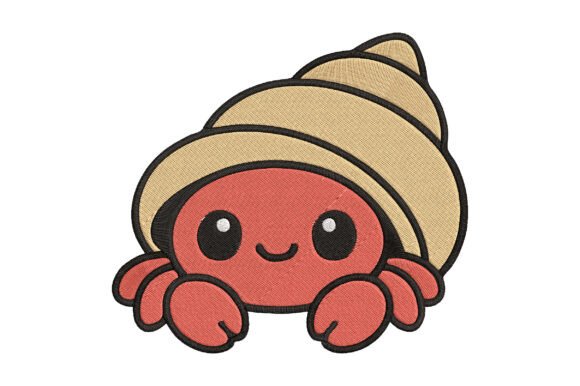
Hermit Crab Embroidery Design
First Impression: Instantly Cute, Ocean-Ready Charm
As an embroidery designer who’s prepped over 200 craft fair booths—and watched which designs stop foot traffic dead in its tracks—I opened the Hermit Crab Embroidery Design with high hopes. And it delivered: this is pure kawaii-meets-coastal charm. It’s not elegant or rustic—it’s cute, bold in personality, soft in execution, and unmistakably joyful. The crab peeking from its shell with that sweet, rounded face reads instantly, even at arm’s length. That’s critical for craft fair buyers scanning a crowded table. No decoding needed. Just delight.
Where It Shines: Craft Fair & Handmade Market Realities
In my booth setup—tote bags stacked upright, aprons draped over a wooden ladder, tea towels folded beside embroidered patches—the Hermit Crab Embroidery Design stood out strongest on three items: small fabric pouches, tea towel embroidery, and embroidered patches. Why? Because those surfaces let the design breathe without competing with texture or scale.
- Tote bag design: Works beautifully as a centered chest pocket accent—not oversized, but eye-catching. Avoid placing it low on the bag body where it gets lost in folds.
- Apron embroidery: Ideal above the pocket or on the bib. Its compact shape fits naturally in standard hoop sizes and doesn’t overwhelm the wearer’s silhouette.
- Tea towel embroidery: A standout. The crab’s roundness balances the towel’s rectangular frame, and the ocean theme feels intentional—not forced—when paired with linen or cotton canvas.
- Embroidered patch: Excellent candidate for iron-on or sew-on versions. Customers love collecting themed patches, and this one photographs well for Etsy listings and Instagram stories.
- Caps and curved surfaces: Proceed with caution. The shell detail and facial features may distort unless digitized with careful underlay and reduced stitch density. Always test on scrap cap fabric first.
Production Practicality: Batch-Friendly, But Not Blindly So
The Hermit Crab Embroidery Design is highly repeatable for batch production—but only if you respect its nuances. It’s not minimalist, nor is it overly dense. Still, there are real-world constraints to honor:
- Dense stitch areas: The shell’s spiral and facial highlights pack tighter stitches. On textured towels or thick denim, use medium-weight cutaway stabilizer to prevent puckering.
- Tiny details: The eyes and smile are small but expressive. Below 2.5 inches wide, they risk blurring—especially on dark fabric. Always verify clarity at your smallest intended size (e.g., 1.75" for patches).
- Fabric texture matters: This design sings on smooth cotton, linen, and quilting weight—but mute on burlap or heavily brushed fleece. Test thread contrast early: light threads on navy fabric need extra topstitch passes for legibility.
- Hoop size & spacing: Designed for standard 4x4 or 5x7 hoops, it leaves clean margins for rehooping multiple items. But don’t crowd it—leave at least ½ inch clearance around the design for smooth hooping on aprons or pouches.
Photography, Listings & Online Appeal
This is where the Hermit Crab Embroidery Design earns its keep for Etsy sellers and digital embroidery file shops. It’s inherently photogenic: round, balanced, full of gentle contrast, and emotionally warm. Pair it with sea glass, sand, or a striped background and it sells itself in a printable mockup. Buyers scrolling handmade product feeds respond to that “aww” factor—especially during spring and summer markets. As a machine embroidery design, it also translates well into listing banners, social media carousels, and email headers. Just avoid overloading it with text overlays; the charm is in its simplicity.
Booth Impact & Buyer Engagement
At last weekend’s seaside craft fair, I placed a set of three tea towels—each with the Hermit Crab Embroidery Design in different thread colors (coral, seafoam, and buttercream)—next to a small chalkboard sign reading “Ocean Happy.” Within 90 minutes, all three were gone—and two customers asked for matching pouches on the spot. Why? Because it created theme cohesion without feeling matchy-matchy. It reinforced brand consistency across small shop products while leaving room for personalization (thread color swaps, fabric choices). For boutique makers building a coastal aesthetic, this isn’t just an Animals embroidery file—it’s a visual anchor.
Designer Notes You Can’t Skip
Before cutting your first production run, do these six things:
- Test the Hermit Crab Embroidery Design on scrap fabric matching your final product—especially if using textured towels, curved caps, or dark fabrics.
- Check thread contrast in natural light. What looks vivid on screen may fade on indigo denim or charcoal linen.
- Review spacing between shell outline and facial features—tight gaps can fill in on low-density stabilizer.
- Confirm hoop size compatibility with your embroidery machine and most common projects (e.g., 4x4 for patches, 5x7 for tote bags).
- Inspect stitch density in the shell spiral—if it’s over 18,000 stitches, consider simplifying for faster turnaround on craft fair orders.
- Verify commercial licensing status before selling finished products. If this is a digital embroidery file, ensure your license covers resale of physical handmade products.
Final Thought: More Than a Crab—It’s a Mood
The Hermit Crab Embroidery Design isn’t just another animal motif. It’s a mood lifter, a conversation starter, and a reliable craft fair product when executed with intention. It works because it’s emotionally clear, visually generous, and production-smart—if you treat it like the thoughtful design it is. For Etsy sellers juggling 10+ embroidery files, for small shop owners curating seasonal collections, and for creative entrepreneurs building recognizable handmade brands: this one earns shelf space. Just remember—its sweetness isn’t accidental. It’s engineered to connect, photograph well, and sell repeatedly. Now go stitch something joyful.